
If you watched Young Washington and found yourself wondering what kind of firearm George Washington would have carried as a young man, you are not alone.
The movie brings viewers back to the 1750s, before Washington became commander of the Continental Army, before the Revolution, and long before he became the first president of the United States. This was the world of the French and Indian War, frontier forts, Virginia militia service, British military influence, and a mix of firearms that can be confusing if you are new to early American arms.
So what did young George Washington use? Was it a musket? A rifle? A longrifle? A flintlock? The answer is not one simple object. It depends on the setting, the duty, and the kind of firearm we are talking about.
The short answer is this:
Young Washington lived and served in a flintlock world. Military men commonly used smoothbore muskets and pistols, while hunters and frontier riflemen increasingly valued rifled arms for accuracy. The American longrifle tradition was already taking shape in the colonial backcountry, and it would become one of the most recognizable firearms of the American frontier.
That difference matters. A musket and a longrifle are not the same thing.
What kind of firearm would young George Washington have known?
George Washington came of age in Virginia in the mid-1700s. As a young officer, surveyor, and militia commander, he moved between plantation society, frontier travel, and military service. That meant he would have known several kinds of flintlock firearms.
Common arms of that world included:
- Military muskets
- Flintlock pistols
- Fowling pieces
- Trade guns
- Privately owned rifles
- Early American longrifles
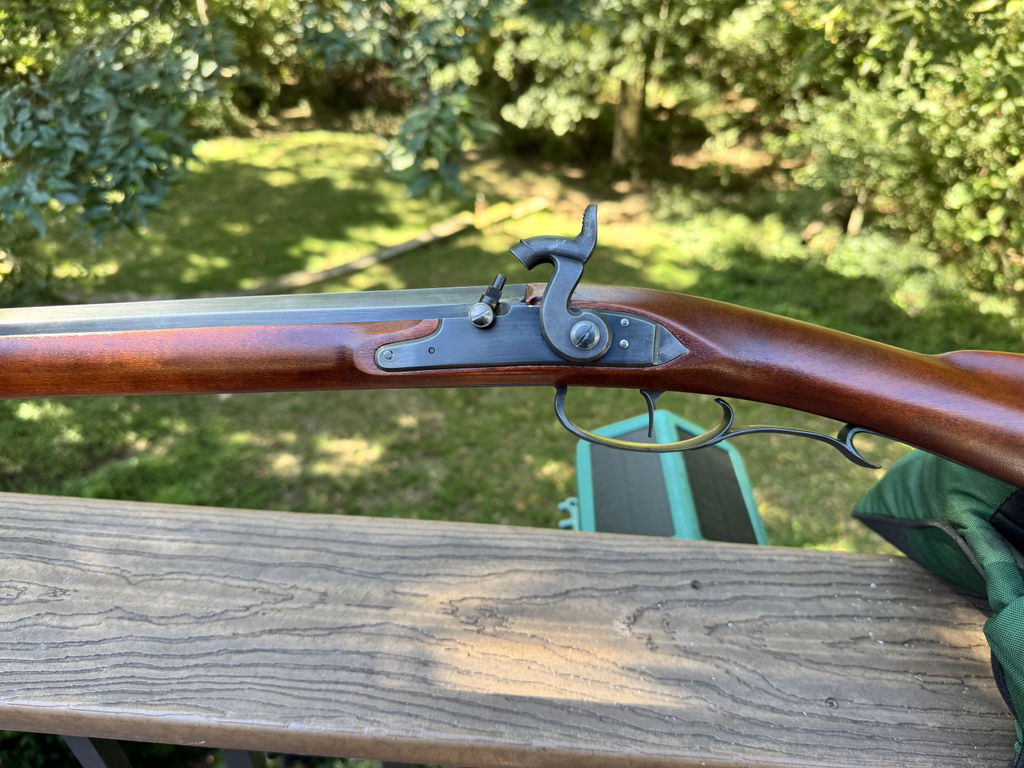
Most of these were flintlocks. A flintlock is not one exact model of firearm. It describes the ignition system. When the trigger is pulled, a piece of flint strikes steel, creating sparks that ignite priming powder in the pan. That flash then sets off the main powder charge in the barrel.
In other words, both a musket and a rifle can be flintlocks. The more important difference is what is inside the barrel.
Musket vs. longrifle: what is the difference?
A musket is usually a smoothbore firearm. That means the inside of the barrel is smooth. Muskets were valued for military use because they could be loaded relatively quickly, used with bayonets, and fired in volleys by groups of soldiers.
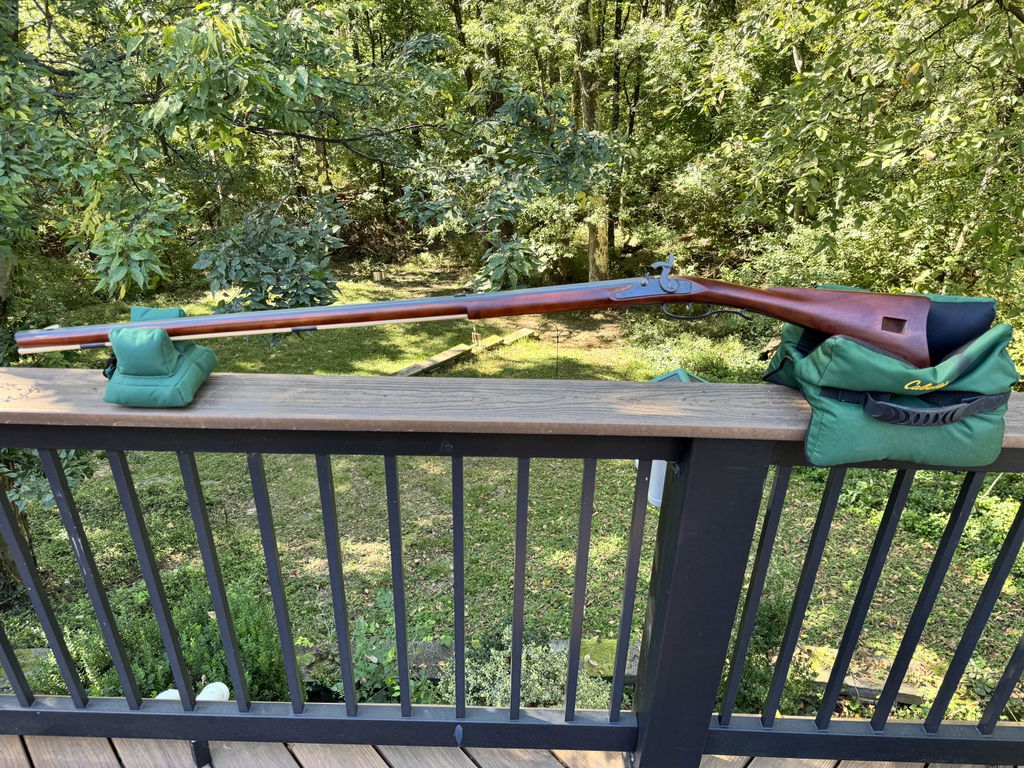
A longrifle has rifling inside the barrel. Rifling means spiral grooves are cut into the bore. Those grooves grip the patched round ball and give it spin, which improves accuracy.
That is the simple difference:
A musket is usually smoothbore and built for military practicality.
A longrifle is rifled and built for accuracy.
This does not mean one was simply better than the other in every situation. They served different purposes.
A musket made sense for soldiers standing in formation, firing together, and using bayonets. A rifle made sense for hunting, frontier travel, and more careful shooting at longer distances. The rifle was slower to load, but it could be much more accurate in the hands of someone who knew how to use it.
Was George Washington carrying a musket or a rifle?
For a movie scene, that depends on what the filmmakers chose to show. For the real Washington, the most honest answer is that he lived around both military and civilian arms.
As an officer, Washington would have been connected to military arms, including muskets and pistols. As a Virginian who spent time on the frontier, he also lived in a culture where privately owned rifles and hunting arms mattered.
It is tempting to ask, “What gun did George Washington carry?” But a better historical question is, “What firearms were common in Washington's world?”
The answer is broader and more interesting.
In the 1750s, especially around the French and Indian War, colonial America was not a neat world where everyone carried one standard firearm. British regulars, colonial militia, Native allies, French troops, traders, settlers, hunters, and officers all brought different arms into the story.
At Fort Necessity and in the Ohio Country, Washington was operating in a frontier war. That world included military muskets, but it also included the kind of practical arms used by people who lived, hunted, and traveled in the backcountry.
Were longrifles used during the French and Indian War?
Yes, rifles were part of the colonial frontier before the American Revolution. The fully developed “Kentucky rifle” name came later, but the longrifle tradition was already growing among German and Swiss-influenced gunsmiths in Pennsylvania, Virginia, Maryland, and surrounding regions.
These rifles were long, graceful, and accurate. They were not military muskets. They were tools for hunting, protection, and frontier life.
During the French and Indian War, rifles did not replace muskets as the standard military arm. But riflemen and frontier marksmen were part of the wider world Washington encountered. By the time of the American Revolution, rifle companies from places like Pennsylvania, Maryland, and Virginia were well known for their skill, and Washington understood the value of riflemen even though muskets still dominated formal military use.
Why were longrifles so accurate?
The longrifle's accuracy came from several features working together.
First, the rifled barrel gave the ball spin. That made the ball fly more consistently.
Second, the long barrel gave a longer sight radius. That can help a careful shooter aim more precisely.
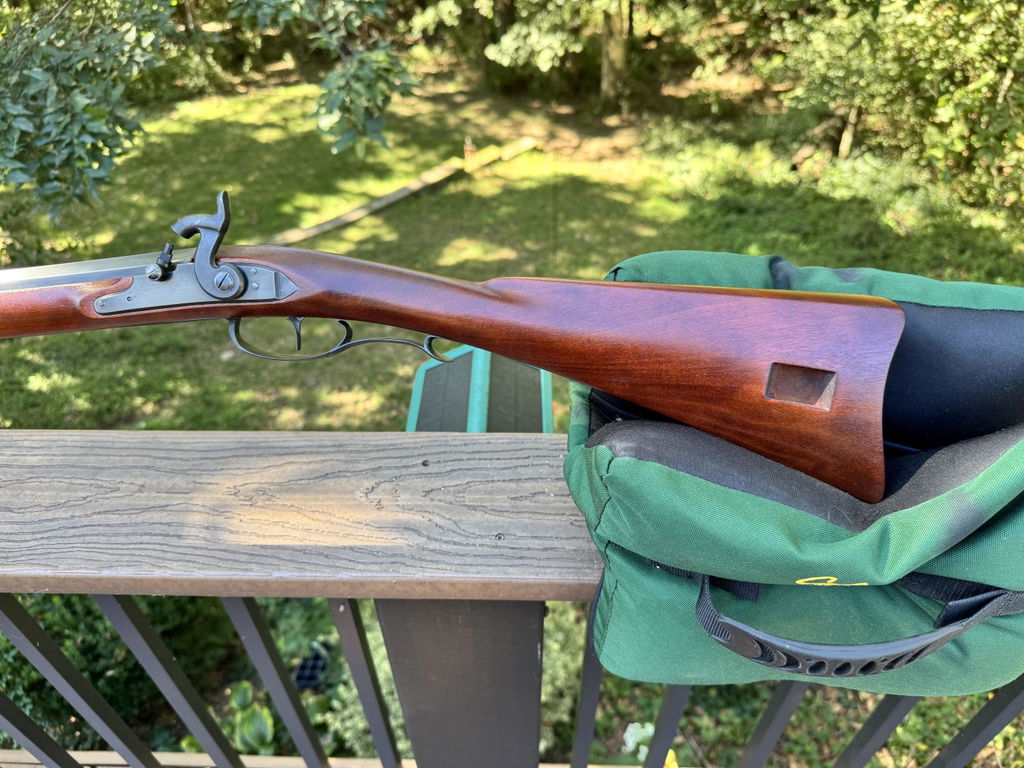
Third, these rifles were often built for the person using them. The architecture, balance, trigger, sights, and stock shape all mattered.
A good longrifle was not just a long tube with a lock on it. It was a carefully shaped tool. The best examples have a kind of quiet intelligence in the design. They carry well, point naturally, and show the eye of the maker.
That is part of why people still care about them today.
What is the American longrifle?
The American longrifle is one of the great firearms traditions of early America.
It grew from European riflemaking knowledge, especially Germanic traditions, and adapted to the needs of colonial America. Over time, regional schools developed. Rifles from Pennsylvania, Virginia, Tennessee, North Carolina, and other areas took on different lines, details, patchboxes, carving, hardware, and architecture.
A longrifle was not just a weapon. It was also a working tool, a hunting arm, a frontier companion, and often a beautiful object.
That is why the longrifle still draws people in. It is history you can hold, study, build, and use.
Can you build a flintlock longrifle today?
Yes. People still build flintlock longrifles today.
Some builders start with a blank piece of wood and a collection of parts. That is a traditional and rewarding path, but it takes a lot of skill, time, and specialized knowledge.
A kit can make the process more approachable. A good kit gives the builder a clear path while still leaving real handwork, finishing, fitting, and decision-making.
That is where Kibler longrifle kits fit in.
Kibler kits are designed for people who want the experience of building a real longrifle without starting from a rough plank and a box of unrelated parts. The major shaping and inlet work is done with modern precision, but the builder still does the careful finishing work that makes the rifle their own.
This is not the same as buying a finished production muzzleloader. It is also not the same as building from scratch. It is a middle path that lets more people enter the world of traditional longrifles with a better chance of success.
Which Kibler kit is closest to the world of young Washington?
No modern kit should be described as “the exact rifle George Washington carried.” That would be too simple, and probably not honest.
But if Young Washington made you interested in the firearms of colonial America, several Kibler kits connect naturally to that world.
The Colonial Rifle Kit is a strong place to start for people interested in earlier American longrifle architecture. It has the feel of a serious colonial rifle and fits well with the larger story of 18th-century America.
The Relief Carved Woodsrunner Rifle Kit is the strongest product connection for this article. It gives the reader a clear visual bridge from movie curiosity into the world of carved, historically inspired American longrifles. The Woodsrunner is trim, handy, and practical, with the kind of character that appeals to people who imagine the backcountry, hunting, and travel. The relief carving also helps show that a longrifle was not just a tool. It could be a carefully shaped, decorated, deeply personal object.
The Southern Mountain Rifle Kit connects to a later but deeply important American rifle tradition. It is especially interesting for people drawn to the Appalachian and southern mountain rifle schools.
Each kit teaches something. The point is not to dress up a modern product as a movie prop. The point is to help people understand the real firearms tradition behind the story.
Why this matters after Young Washington
Movies can open a door. They give people a story, a face, and a reason to ask questions.
A viewer may leave Young Washington asking a simple question: “What kind of gun did George Washington use?”
That question can lead somewhere better:
What is a flintlock?
What is a musket?
What is a longrifle?
Why did rifles matter on the frontier?
How were early American rifles built?
Can someone build one today?
Those are good questions. They are worth answering carefully.
The world of young George Washington was not the world of modern firearms. It was a world of black powder, flint, handmade parts, local gunsmiths, military supply problems, frontier travel, and real skill. Understanding the firearms helps us understand the people who used them.
And for many people, that is where the longrifle becomes more than an old object in a museum case. It becomes something they want to study, build, and preserve.
FAQ
What gun did George Washington use in Young Washington?
The exact firearm shown in the movie may depend on the scene and the prop used by the filmmakers. Historically, young Washington lived in a world of flintlock firearms, including military muskets, pistols, fowling pieces, trade arms, and rifles. It is safer to talk about the types of firearms common in Washington's world than to claim one exact gun without documentation from the film.
Did George Washington use a longrifle?
George Washington lived around rifles, muskets, pistols, and other arms, and he understood the value of skilled riflemen. However, it is best not to claim that one specific longrifle was “the” rifle of young Washington unless a documented source supports it. The more useful point is that the American longrifle tradition was already part of the colonial frontier world that shaped early America.
What is the difference between a musket and a longrifle?
A musket is usually smoothbore, meaning the inside of the barrel is smooth. Muskets were useful for military volley fire and bayonet use. A longrifle has rifling inside the barrel. That rifling spins the patched round ball and can make the rifle much more accurate.
Were longrifles used in the French and Indian War?
Rifles were present in colonial America before the Revolution and were part of frontier life during the French and Indian War era. Muskets remained the dominant military arm, but rifles mattered to hunters, frontiersmen, and later rifle companies in the Revolutionary period.
What is a flintlock rifle?
A flintlock rifle is a rifle that uses a flintlock ignition system. When the trigger is pulled, the flint strikes steel and creates sparks. Those sparks ignite powder in the pan, which then ignites the main powder charge in the barrel.
Is a longrifle the same as a Kentucky rifle?
The terms are related, but not exactly the same. “Kentucky rifle” became a popular name later, especially because of stories and songs connected to the War of 1812. Many rifles called Kentucky rifles were actually made in Pennsylvania, Virginia, Maryland, North Carolina, Tennessee, and other regions. “American longrifle” is often the better general term.
Can I build a flintlock rifle today?
Yes. Many people still build flintlock rifles today. A Kibler kit gives builders a more approachable way to build a historically inspired longrifle, with modern precision in the major shaping and inlet work while still leaving meaningful hand finishing to the builder.
What Kibler kit should a beginner consider?
For many new builders, the best choice depends on what draws them in. For this Young Washington article, the Relief Carved Woodsrunner should be the main path because it gives readers a beautiful, immediate example of a historically inspired frontier longrifle. The Colonial Rifle Kit can still be linked as a related early-American option, and the Fowler can be linked as the best smoothbore comparison for readers trying to understand muskets, fowlers, and rifles.
If Young Washington made you curious about the firearms of early America, start with the longrifle. Learn what made it different from a musket, why it mattered on the frontier, and how these rifles were actually built.
Kibler longrifle kits give modern builders a way to step into that tradition with a kit designed for accuracy, good architecture, and a better building experience.
Leave a comment