
If you've spent much time researching traditional muzzleloaders online, you've probably heard some familiar claims.
Flintlocks aren't reliable. They aren't accurate. Cleaning takes forever. Round balls aren't effective for hunting. Original rifles were crude. Traditional rifles are difficult to build.
Most of these misconceptions have the same source. They come from inexpensive production rifles, modern marketing, or people who have never spent much time with a well-built traditional longrifle.
The reality is quite different.
Let's look at the most common myths and compare them with what history and experience actually tell us.
Myth #1: Flintlock muzzleloaders aren't reliable
This is probably the most common misconception of all.
Flintlock muzzleloaders were the firearm of choice for nearly 200 years. They were used as military arms, hunting rifles, and everyday tools. People trusted them in circumstances where their lives depended on them.
That does not mean every flintlock works equally well. Quality matters.
A properly tuned lock with quality components can be very dependable. Much of the bad reputation comes from cheap import and production rifles of low quality. Poor locks, rough geometry, weak springs, and inconsistent sparks can make a rifle frustrating to use. But that is not a fair picture of a well-made traditional flintlock.
Manufacturers of modern inline muzzleloaders would prefer you to believe flintlocks do not work well. But the history of the flintlock tells a different story.
When people shoot a quality rifle with a good lock, they are often surprised by how quick and consistent ignition can be.
Myth #2: Flintlocks aren't accurate
A traditional muzzleloader is not a scoped modern rifle, but that does not mean it lacks accuracy.
In the hands of someone with experience, a good flintlock can produce 2 to 4 inch groups at 100 yards with iron sights. At much longer distances, the sights and the shooter become the limiting factors more than the rifle itself.
That is important to understand. Accuracy is not only about the barrel. It depends on load development, patch and ball fit, powder charge, sight picture, follow-through, and consistent shooting technique.
For the distances where traditional rifles were intended to be used, a quality flintlock can be very capable.
Myth #3: Round balls don't work well for hunting
The patched round ball has harvested game across North America for generations.
For typical hunting distances with iron sights, round balls work quite well and are capable of dependably stopping North American big game when used appropriately. As with any hunting tool, shot placement matters. So does knowing your rifle, understanding your effective range, and following your state's hunting regulations.
Manufacturers of conical projectiles would like you to think otherwise, but the round ball is not some weak or ineffective leftover from the past. It was used because it worked.
Modern projectiles have their place. That does not erase the proven record of the patched round ball in a traditional rifle.
Myth #4: Muzzleloaders take too long to clean
Many new shooters imagine cleaning a muzzleloader as a long, messy chore.
With a little practice, it is straightforward. After a normal shooting session, a traditional black powder rifle can often be cleaned in about 10 to 15 minutes.
The routine is simple: clean the bore, dry it thoroughly, apply light protection, and wipe down the exterior. The key is not to make it complicated and not to put it off.
Black powder fouling is part of the system. If you understand that and clean the rifle properly, maintenance becomes just another normal part of shooting.
Myth #5: Original longrifles were plain
This misconception disappears quickly when you study surviving originals.
Many historic American longrifles were highly decorated with carving, inlays, engraving, and patchboxes. Some were plainer, especially later working rifles from the nineteenth century, but many originals show real artistry.
The decoration was not random. It reflected regional schools, individual makers, customer preferences, and the skill of the builder.
A good longrifle was not just a tool. It could also be a statement of craftsmanship, pride, and regional identity.
Myth #6: Original rifles were not finely finished
Some people assume early rifles were crude because they were made without modern machinery.
That is not true.
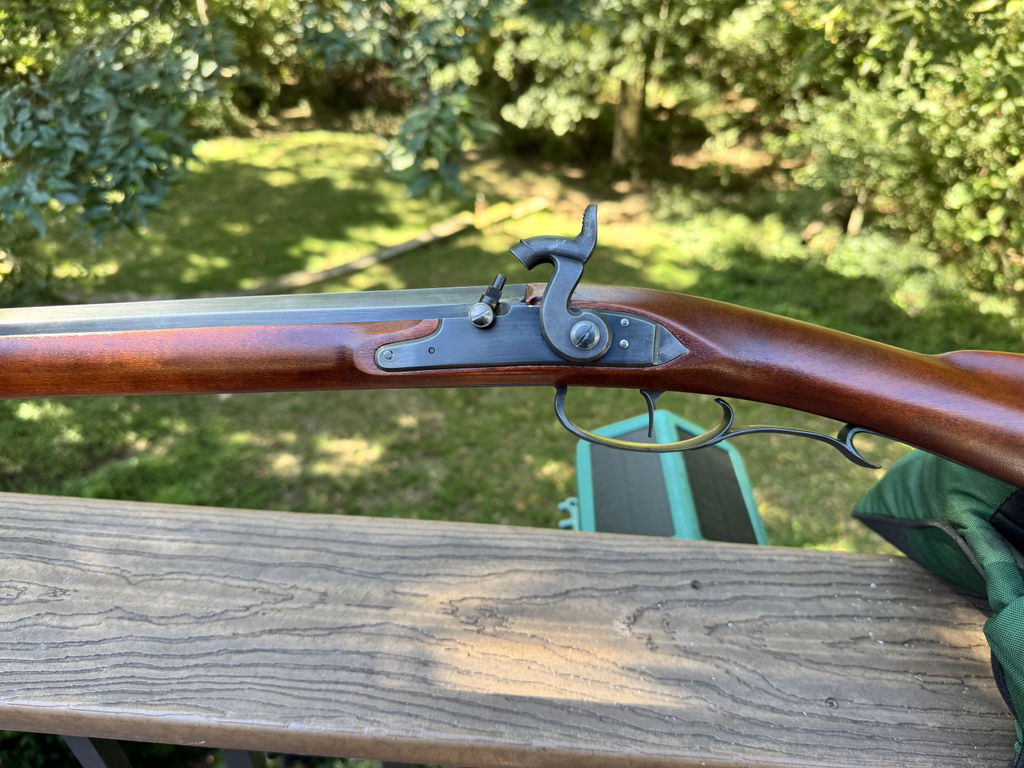
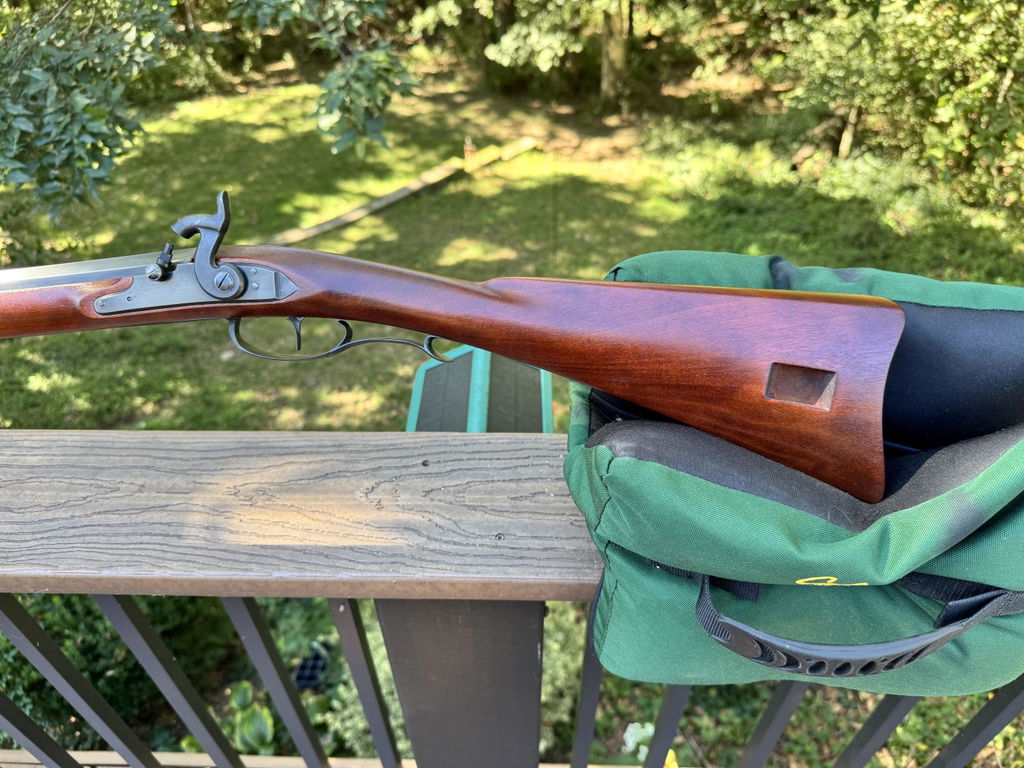
Many original rifles show carefully finished wood and metal work. The architecture, shaping, lock panels, molding lines, carving, and metal finish can be very refined. Quality varied from maker to maker, of course. Some rifles were rougher. But many were completed in a very professional manner.
This is one reason original rifles still matter. They teach us proportion, balance, shaping, and restraint. They show what skilled builders were capable of long before modern equipment.
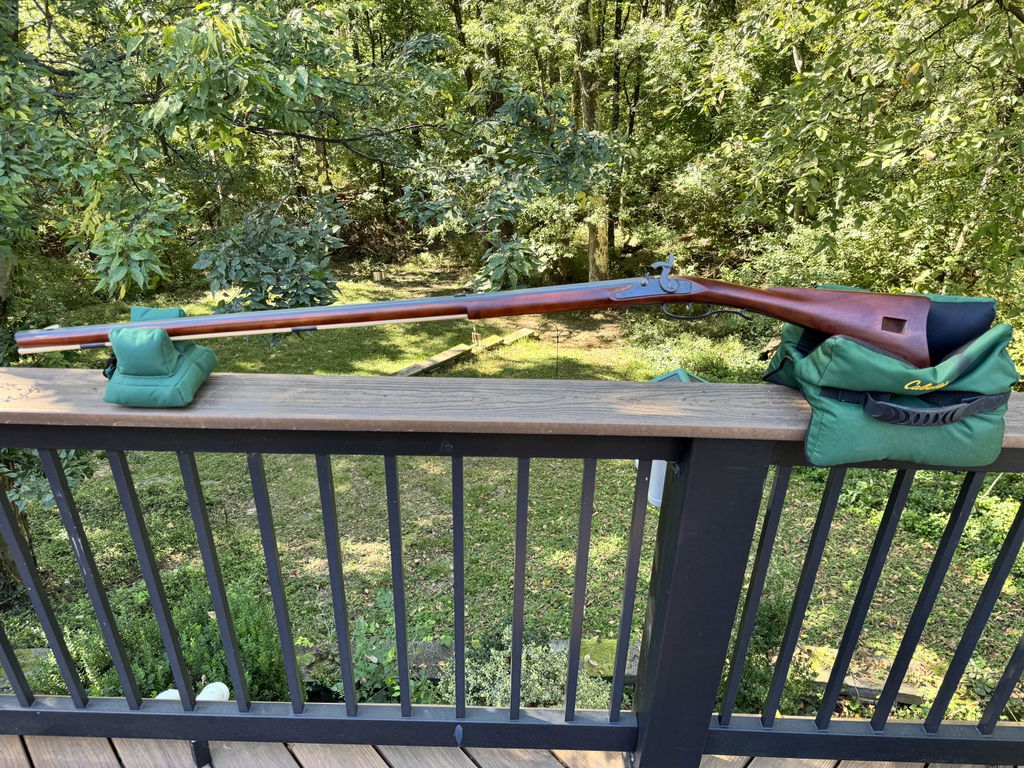
Modern CNC machining allows Kibler's Longrifles to reproduce historical architecture and precision consistently while still leaving the final building and finishing experience to the customer.
Myth #7: Traditional muzzleloaders are hard to build
A traditional rifle kit can be difficult if the parts do not fit well.
That is where many beginners get into trouble. A cheaper kit may look easier at first, but if it requires a lot of fitting, correcting, and problem-solving, it may not be easier at all.
Fit matters more than many people realize.
A precisely made kit gives the builder a better starting point. It reduces frustration and lets the customer focus on the enjoyable parts of the build: shaping, finishing, learning, and making the rifle their own.
That is one of the reasons Kibler kits are different. The value is not only in the parts. It is in the precision of the system.
Myth #8: More expensive rifles are just paying for decoration
Decoration is only one part of the story.
When you compare a quality traditional rifle to a cheap production muzzleloader, the difference is not just carving or engraving. It is architecture, lock quality, barrel quality, stock design, balance, machining precision, historical correctness, and fit.
Those details change how the rifle feels, how it builds, and how it performs.
A well-designed longrifle is more than a collection of parts. It is an integrated system.
Why these misconceptions continue
Many people have simply never handled a well-built traditional rifle.
Their opinions are shaped by bargain production rifles, movies, internet forums, modern inline marketing, or something they heard from someone else.
That is understandable.
But it also explains why these misconceptions have survived for decades. Once someone spends time with a properly built longrifle, many of the assumptions begin to disappear.
Frequently asked questions
Are flintlocks reliable?
Yes. A quality flintlock with a properly tuned lock and good components can be very reliable. Many reliability complaints come from cheap production rifles or poorly maintained locks.
Do flintlocks misfire often?
A good flintlock should not misfire constantly. Misfires usually point to issues with the flint, frizzen, priming, vent, lock condition, or loading routine.
Are flintlocks accurate?
Yes. A well-made flintlock can be very accurate within the practical limits of iron sights and the shooter's ability.
How accurate is a flintlock at 100 yards?
With an experienced shooter and a good rifle, 2 to 4 inch groups at 100 yards are realistic. Many shooters will be limited more by iron sights and technique than by the rifle.
Can you hunt deer with a round ball?
Yes, where legal. A patched round ball can be effective for deer at appropriate distances with good shot placement.
Are round balls effective on larger game?
Round balls have been used successfully on North American game for generations. The key is choosing an appropriate caliber, staying within practical range, and placing the shot well.
How long does it take to clean a muzzleloader?
With practice, many shooters can clean a traditional muzzleloader in about 10 to 15 minutes after a normal shooting session.
Do flintlocks work in wet weather?
They can, but wet weather requires care. Keeping the lock, pan, priming powder, and vent protected makes a difference.
How long does it take to reload a muzzleloader?
Reloading is slower than modern cartridge firearms, but speed is not the point of traditional muzzleloading. Safe, consistent loading matters more than rushing.
What is the difference between a traditional muzzleloader and an inline?
A traditional muzzleloader uses older lock systems such as flintlock or percussion and is usually built around historical architecture. An inline muzzleloader is a modern design that often uses modern ignition systems and modern projectiles.
Are Kibler kits good for beginners?
Yes, many beginners choose Kibler kits because the precision fit reduces a lot of the difficult fitting work that can make other kits frustrating.
Why do Kibler kits fit together differently?
Kibler kits are designed and machined with a high level of precision. That precision gives the builder a better starting point and helps preserve the architecture of original rifles.
Conclusion
Traditional muzzleloading has survived because it works.
These rifles fed families, won wars, settled frontiers, and inspired generations of craftsmen.
Most misconceptions disappear the first time someone shoots a quality rifle.
The challenge isn't convincing people. It's getting one into their hands.

1 comment
Jim, thanks for your informative blog! I’ve built your SMR (actually rebuilt with a higher grade stock) and Woodsman, Both wonderful kits and shooters. I’ve got 2 Barn guns on order to build with a friend as we did our Woodsrunners. It’s given me enough confidence to work on an early Lancaster component set from a competitor that they were able to custom cut to my LOP ( 16.5 inches-I’m 6’7”). I know the architecture might not be correct and it’s going to be a lot of work, but I’m having at it. If you could mill longer LOP stocks you’d be my only source! I’ve also printed your stock-carving tutorial and am practicing that. I’ve hunted with black powder cartridge and in-lines for years but am looking forward to a flintlock deer. I’m limited to 50 yards with my vision and iron sights so I consider it like archery hunting with smoke. Sewed up 2 shooting bags from your kits s as well, another fun skill learned. I’ll probably order another metal component SMR set to use that first stock once I refinish it to my (now) higher standard. Thanks for all your passion for muzzle loading flintlocks.
Leave a comment